While playing Blur the other day with a friend, we got to wondering what stats and behaviors the game tweaks to adjust difficulty. Then we thought, "Wouldn't it be great if games allowed players to mix and match the stats how we please?"
For example, the settings which affect difficulty in Blur (regardless of which the developers coded into the Easy, Medium and Hard options) include vehicle speed, vehicle durability, collision damage, powerup strength, powerup frequency, mod availability, and number of laps.
Perhaps I'm mistaken, but it seems a fairly simple system of checkboxes and sliders (ala Oblivion's difficulty slider) would enable players to tailor gameplay to exactly their preferences.
Some players would turn off collision damage. Some would create endurance races with many laps or quick one-lap competitions. Others might make powerups available but scarce.
What's wrong with this scenario? I'm basically describing a detailed cheat mode... the sort that was extremely popular in Goldeneye 64. Such options do not eliminate appreciation for the developers careful balancing. They simply add further ways to play the game at very little developer expense.
Almost any style of game can benefit from such options which exponentially expand gameplay customization. This feature would simultaneously open the game up to more playstyles (potential consumers) and encourage players to keep their games for replay (discouraging trade-ins).
It's a no-brainer.
Showing posts with label difficulty. Show all posts
Showing posts with label difficulty. Show all posts
Monday, March 14, 2011

Tuesday, October 05, 2010
FPS by degrees
I won't name names, but I've recently played a few shooters with some friends and in every game outperformed them by leaps and bounds. In fact, in Modern Warfare 2, my friends simply couldn't perform well enough to enjoy the game. While I was sniping this player and stabbing that one, my friends were dying and dying some more. At the end of a five-minute match, they had racked up only a few kills each, whereas I had twenty or thirty.
My point is not that I'm that good. At times, other players mop the floor with me, and I'm not playing in the elite matches.
No, my point is that a wide variety of gamers enjoy shooters, but their shorter histories with shooters, lesser skill and different playstyles are rarely acknowledged in gameplay design.
I'm not asking for flag football here. But how about some more games that don't pretend everyone wants to be a pro? Some people just want to blow stuff up and shoot each other in the face.
My point is not that I'm that good. At times, other players mop the floor with me, and I'm not playing in the elite matches.
No, my point is that a wide variety of gamers enjoy shooters, but their shorter histories with shooters, lesser skill and different playstyles are rarely acknowledged in gameplay design.
I'm not asking for flag football here. But how about some more games that don't pretend everyone wants to be a pro? Some people just want to blow stuff up and shoot each other in the face.
Wednesday, November 11, 2009
progression through failure
I just want to emphasize a point I made the other day. Players can, and generally should, progress even as they fail.
You can see this in games like Diablo 2 and Borderlands. When you die, you don't lose the experience points you gained on the way to your goal (such as killing a boss mob).
That ensures, in a natural way, that players will eventually overcome any challenge. Failure doesn't mean reset. You're always progressing.
The frustration a player feels in response to failure is nothing compared to the frustration of being stuck. The player must always feel like he or she is making progress... even when that player is performing poorly.
You can see this in games like Diablo 2 and Borderlands. When you die, you don't lose the experience points you gained on the way to your goal (such as killing a boss mob).
That ensures, in a natural way, that players will eventually overcome any challenge. Failure doesn't mean reset. You're always progressing.
The frustration a player feels in response to failure is nothing compared to the frustration of being stuck. The player must always feel like he or she is making progress... even when that player is performing poorly.
Thursday, October 29, 2009
hardcore for casuals
I was happy to hear that Left 4 Dead 2 will include a sort of hardcore mode. Players can opt to give up aid from the interface, like being able to see one's teammates through walls by a surrounding glow.
Hardcore modes don't please only the hardcore. They also please casual players by getting hardcore players the hell out of their games.
For a casual player, there are few things more annoying than a fellow player trying to squeeze your every action into some achievement fanatic's model. It's like all freedom of choice is robbed from you as a tyrant barks out a strategy that he grabbed off some website for people who are more concerned about being the best than having fun.
I'm really not trying to insult hardcore players. I realize that winning is the definition of fun for some people, and that's fine. I enjoy victory and competition, myself, but I'm generally more concerned with the journey than the end; as are many gamers.
I'm just pointing out that providing a hardcore mode or customizable multiplayer scenarios allows hardcore and casual players to each enjoy playing the game their own way. A hardcore mode can be a good idea even if the hardcore are not a major part of your target audience.
Hardcore modes don't please only the hardcore. They also please casual players by getting hardcore players the hell out of their games.
For a casual player, there are few things more annoying than a fellow player trying to squeeze your every action into some achievement fanatic's model. It's like all freedom of choice is robbed from you as a tyrant barks out a strategy that he grabbed off some website for people who are more concerned about being the best than having fun.
I'm really not trying to insult hardcore players. I realize that winning is the definition of fun for some people, and that's fine. I enjoy victory and competition, myself, but I'm generally more concerned with the journey than the end; as are many gamers.
I'm just pointing out that providing a hardcore mode or customizable multiplayer scenarios allows hardcore and casual players to each enjoy playing the game their own way. A hardcore mode can be a good idea even if the hardcore are not a major part of your target audience.
Thursday, October 08, 2009
controls vs navigation
Yesterday, I took Batman: Arkham Asylum over to my occasional-gamer friend's house for him to try. "Occasional gamer" is what I call someone who only owns one or a few games at a time and only plays once or twice per month (if that). Most gamers I know face-to-face fall into this category.
My friend loves the game. But, as always, I was surprised by the extent of his difficulties with things I've long been accustomed to. Controlling character movement and the camera in a 3D world is always tricky for occasional gamers. He voiced appreciation for the amount of practice Arkham affords him for the controls... though I expect he would have died against the first giant if I hadn't told him to stay away from it.
But what really shocks me every time is his failing sense of direction. In life, this guy can always tell you where North is and rarely gets lost even in completely foreign areas. In games, on the other hand, he's completely oblivious. After completing a very brief encounter, he'll head back in the direction he just came from instead of move onward.
It seems that the controls, the combat, and other things demand so much focus from my game-rusty friend that he doesn't pay much attention to his surroundings. He forgets where he is, where he's been, and what he's supposed to do because his untrained mind is overwhelmed with everything else. The map helps, but a map can't completely alleviate frustration from losing one's bearings.
This story has relevance for both occasional gamers and veterans. The more a player must concentrate on controls, the less of that player's concentration is available for other mental tasks, like navigation. Looking at another way... the less even an experienced gamer has to concentrate on controls and such, the more you can challenge that player in other ways.
My friend loves the game. But, as always, I was surprised by the extent of his difficulties with things I've long been accustomed to. Controlling character movement and the camera in a 3D world is always tricky for occasional gamers. He voiced appreciation for the amount of practice Arkham affords him for the controls... though I expect he would have died against the first giant if I hadn't told him to stay away from it.
But what really shocks me every time is his failing sense of direction. In life, this guy can always tell you where North is and rarely gets lost even in completely foreign areas. In games, on the other hand, he's completely oblivious. After completing a very brief encounter, he'll head back in the direction he just came from instead of move onward.
It seems that the controls, the combat, and other things demand so much focus from my game-rusty friend that he doesn't pay much attention to his surroundings. He forgets where he is, where he's been, and what he's supposed to do because his untrained mind is overwhelmed with everything else. The map helps, but a map can't completely alleviate frustration from losing one's bearings.
This story has relevance for both occasional gamers and veterans. The more a player must concentrate on controls, the less of that player's concentration is available for other mental tasks, like navigation. Looking at another way... the less even an experienced gamer has to concentrate on controls and such, the more you can challenge that player in other ways.
Friday, June 12, 2009
fear and power
To be honest, I have mixed feelings about the upcoming Dante's Inferno:
It's made by a lot of the same guys who made Dead Space, now called Visceral Games, so I have little doubt that they're aiming for high quality and they have the skills and drive to achieve it. Actual gameplay hasn't been shown yet, but the general idea of melee action through monsters and areas fashioned after Dante's dream of Hell is definitely exciting. My guess is it's going to be pretty sweet.
But, though I'm sure the game will be creepy, Visceral seems to be inherently dampening fear of Dante's demons by making them all mortal. When you give a character power over a threat, that threat is less intimidating.
Of course, perception is everything. Perceived power is more important than actual power when trying to instill fear. A perfect example is the fight between Sam and Shelob, the giant spider, in LOTR: The Return of the King. It seems as though Sam is hopelessly outmatched, and that is what makes the encounter frightening.
If Sam immediately demonstrated some success, the scene would be less thrilling. If his success was predictable, if it was more the result of careful planning than of impulsive decisions and quick reflexes, we would fear less for Sam.
The biggest hurdle for a game designer trying to instill fear is certainty of victory. If a player knows he must defeat an enemy to progress in the game, then he immediately knows that victory is possible.
Books and movies have been killing off supernatural foes like demons and spirits for millennia. But I've always thought the ghostly tales predating the French Revolution and its cultural aftershocks are the better frights. Authors often played with the Christian understanding of demons, angels and souls; a perception that spirits could not be killed and human beings have no physical capacity to oppose them. People could only mentally resist and call upon God's effortless protection. Folktales preceding Christianity also involved struggles between humans and spirits in which humans used only their wits to escape, capture, or banish the spirits... rather than to destroy them.
Anyway, so here are some recommendations I would make to the Dante's Inferno team.
Don't make every enemy effectively mortal. Instead, provide non-lethal ways for the player to defeat the most terrifying beings. For example: a particular demon might be bound to a certain area, so the player could escape the demon by crossing some threshold (with that demon, and others, actively impeding progress and giving chase).
Satan in particular should not be killed. If it were my choice, I'd end the game by letting the player seemingly make headway in a battle against Satan, then proving the devil to be far superior in might and, in the end, apparently victorious. When the player seems defeated, that's when God reaches into Hell to deliver him. This ensures Satan, the game's final enemy, is as terrifying as possible. It also respects Dante Alighieri's belief, clearly represented in his tale, that he is saved by God and not himself. It would be a fresh game experience for most players. And finally, it could make for an exceptionally powerful story experience. In fact, I would have the player rescued by cherubs or children. In Christian theology (Dante's theology), the youngest and most innocent child could not be touched by Satan himself so long as God protects the child. That's a powerful image: a fearless, smiling young child ignores the demonic ruler of Hell as he or she takes the hand of the player's character and leads the player up a white stairway to Heaven.
For those epic enemies which are mortal, ensure the player must make use of more than strategy to win. Obviously, you don't want to stack the deck too heavily against the player, but ensure that the encounter retains some unpredictability even after the player gains an understanding of what that particular enemy's strengths and habits are.
Introduce "enemies" which can neither harm nor be harmed by the player. A malicious ghost beyond one's ability to affect is a frightening experience.
Remember that Satan is known as The Deceiver. Undermine the player's trust in dialog, in companions, and even in basic senses. For example: spiders might suddenly spill out from Dante's armor and crawl across his body, causing Dante to react in panic... and then the spiders are suddenly gone (they were just an illusion). Or a damned soul might rest still while calling out to the player in a pathetic tone with words of remorse and a plea for aid, then transform and attack the player if he gets too close.
Obviously, I could go on for days, so I'll stop here. :)
It's made by a lot of the same guys who made Dead Space, now called Visceral Games, so I have little doubt that they're aiming for high quality and they have the skills and drive to achieve it. Actual gameplay hasn't been shown yet, but the general idea of melee action through monsters and areas fashioned after Dante's dream of Hell is definitely exciting. My guess is it's going to be pretty sweet.
But, though I'm sure the game will be creepy, Visceral seems to be inherently dampening fear of Dante's demons by making them all mortal. When you give a character power over a threat, that threat is less intimidating.
Of course, perception is everything. Perceived power is more important than actual power when trying to instill fear. A perfect example is the fight between Sam and Shelob, the giant spider, in LOTR: The Return of the King. It seems as though Sam is hopelessly outmatched, and that is what makes the encounter frightening.
If Sam immediately demonstrated some success, the scene would be less thrilling. If his success was predictable, if it was more the result of careful planning than of impulsive decisions and quick reflexes, we would fear less for Sam.
The biggest hurdle for a game designer trying to instill fear is certainty of victory. If a player knows he must defeat an enemy to progress in the game, then he immediately knows that victory is possible.
Books and movies have been killing off supernatural foes like demons and spirits for millennia. But I've always thought the ghostly tales predating the French Revolution and its cultural aftershocks are the better frights. Authors often played with the Christian understanding of demons, angels and souls; a perception that spirits could not be killed and human beings have no physical capacity to oppose them. People could only mentally resist and call upon God's effortless protection. Folktales preceding Christianity also involved struggles between humans and spirits in which humans used only their wits to escape, capture, or banish the spirits... rather than to destroy them.
Anyway, so here are some recommendations I would make to the Dante's Inferno team.
Don't make every enemy effectively mortal. Instead, provide non-lethal ways for the player to defeat the most terrifying beings. For example: a particular demon might be bound to a certain area, so the player could escape the demon by crossing some threshold (with that demon, and others, actively impeding progress and giving chase).
Satan in particular should not be killed. If it were my choice, I'd end the game by letting the player seemingly make headway in a battle against Satan, then proving the devil to be far superior in might and, in the end, apparently victorious. When the player seems defeated, that's when God reaches into Hell to deliver him. This ensures Satan, the game's final enemy, is as terrifying as possible. It also respects Dante Alighieri's belief, clearly represented in his tale, that he is saved by God and not himself. It would be a fresh game experience for most players. And finally, it could make for an exceptionally powerful story experience. In fact, I would have the player rescued by cherubs or children. In Christian theology (Dante's theology), the youngest and most innocent child could not be touched by Satan himself so long as God protects the child. That's a powerful image: a fearless, smiling young child ignores the demonic ruler of Hell as he or she takes the hand of the player's character and leads the player up a white stairway to Heaven.
For those epic enemies which are mortal, ensure the player must make use of more than strategy to win. Obviously, you don't want to stack the deck too heavily against the player, but ensure that the encounter retains some unpredictability even after the player gains an understanding of what that particular enemy's strengths and habits are.
Introduce "enemies" which can neither harm nor be harmed by the player. A malicious ghost beyond one's ability to affect is a frightening experience.
Remember that Satan is known as The Deceiver. Undermine the player's trust in dialog, in companions, and even in basic senses. For example: spiders might suddenly spill out from Dante's armor and crawl across his body, causing Dante to react in panic... and then the spiders are suddenly gone (they were just an illusion). Or a damned soul might rest still while calling out to the player in a pathetic tone with words of remorse and a plea for aid, then transform and attack the player if he gets too close.
Obviously, I could go on for days, so I'll stop here. :)
Thursday, July 10, 2008
mysteries and puzzles
Corvus talks about mystery novels and how they compare to video games. The point that stuck with me was that a reader doesn't have to struggle to reach the end of the novel, but does have to struggle to anticipate the ending and/or completely understand the story once the end is reached. Games could work the same way.
As a gamer, I'm drawn mostly to exploration and action. So linear, puzzle-based adventure games (achievement-focused) aren't the sort of games I play often. But I do have some experience with puzzle-based gameplay.
Puzzles are great, but the reward for solving them doesn't always have to be narrative/game progression. Like novels involving mystery, games involving puzzles could be completed without players being required to solve all or even (perhaps) any puzzles.
Instead, solving the puzzles could offer the player a more accurate or complete picture of the story. And, like characters in popular novels, the player might have only one opportunity to notice/find clues or solve a puzzle before the story moves forward. Keep in mind... I'm not trying to imagine a particular game system here so much as raise questions about the use of puzzles and clues in games.
The original Neverwinter Nights included a mission in which the player acts as judge over two brothers. The player investigates a crime by speaking to all parties involved, then decides who will be punished. What I love about that mission is that, if my memory is correct, the player can pass judgement and the game moves forward regardless of whether or not the investigation is thorough. You can judge wrongly (not just wickedly, but mistakenly) and keep playing.
That mission did not affect the larger narrative, but a similar scenario could be used to offer the player insights into the central plotline, side narratives, characters, setting, or any other story element. The player needs to be assured some things to feel satisfied at all when the game's end is reached. But, if replayability is supplied by non-narrative elements (like action or exploration), then the player can be allowed to reach the end without having the fullest or clearest picture of events.
If well done, the ending would hint at what replaying could offer: where the gaps are in the player's understanding of characters and events, what unfortunate events could be prevented or rectified, etc. The original Doom game told the player after each level what percentage of secrets he or she discovered, forcing the player to wonder what was missed. Deeper games could accomplish the same effect in more artful ways.
As a gamer, I'm drawn mostly to exploration and action. So linear, puzzle-based adventure games (achievement-focused) aren't the sort of games I play often. But I do have some experience with puzzle-based gameplay.
Puzzles are great, but the reward for solving them doesn't always have to be narrative/game progression. Like novels involving mystery, games involving puzzles could be completed without players being required to solve all or even (perhaps) any puzzles.
Instead, solving the puzzles could offer the player a more accurate or complete picture of the story. And, like characters in popular novels, the player might have only one opportunity to notice/find clues or solve a puzzle before the story moves forward. Keep in mind... I'm not trying to imagine a particular game system here so much as raise questions about the use of puzzles and clues in games.
The original Neverwinter Nights included a mission in which the player acts as judge over two brothers. The player investigates a crime by speaking to all parties involved, then decides who will be punished. What I love about that mission is that, if my memory is correct, the player can pass judgement and the game moves forward regardless of whether or not the investigation is thorough. You can judge wrongly (not just wickedly, but mistakenly) and keep playing.
That mission did not affect the larger narrative, but a similar scenario could be used to offer the player insights into the central plotline, side narratives, characters, setting, or any other story element. The player needs to be assured some things to feel satisfied at all when the game's end is reached. But, if replayability is supplied by non-narrative elements (like action or exploration), then the player can be allowed to reach the end without having the fullest or clearest picture of events.
If well done, the ending would hint at what replaying could offer: where the gaps are in the player's understanding of characters and events, what unfortunate events could be prevented or rectified, etc. The original Doom game told the player after each level what percentage of secrets he or she discovered, forcing the player to wonder what was missed. Deeper games could accomplish the same effect in more artful ways.
Friday, July 04, 2008
segmenting difficulty
Keira wrote an article today that got me thinking about difficulty again.
I had an interesting experience in Oblivion with regard to difficulty. I found that my favorite thing to do in that game is to sneak through the shadows and snipe enemies with my bow. But in order for it to truly feel like sniping (one-hit kills), I had to lower the difficulty. So I was in the peculiar position of preferring low difficulty when fighting with a bow and preferring high difficulty when fighting with a melee weapon.

Oblivion offered admirable control to players by creating a difficulty slider with more than three or four settings. But what would be even more appreciated is player control over specific aspects of difficulty.
This isn't a new concept, of course. Long ago, Nintendo introduced unlockable cheats which could be toggled to affect difficulty in very specific ways. Goldeneye included a cheat that equipped all enemies with rocket launchers. Many games include cheats for invincibility, infinite ammo, or resource availability (weapons, armor, etc). Perfect Dark 64 brilliantly allowed players to choose the personality types of AI opponents.
I just want to point out that much more could be done here. Make players unlock advanced difficulty controls through completion of gameplay, because you've crafted a carefully balanced experience that they might cheat themselves out of if offered control too early or easily. But there are countless kinds of gamers with different needs and desires. Advanced difficulty controls enable players to make your game more personal, as well as add invaluable replayability.

For example, Oblivion could have included damage sliders for different kinds of weapons (bows, melee, magic). Halo 3 could have included a cheat for kamikaze AI (fearless, constantly charging enemies) or put those terrifying hammers in the hands of more enemies. Fable 2 could include cheats that affect the dog companion's combat effectiveness or AI personality (make him vicious or apathetic to combat), or change how NPCs react to the player's character. Dead Space could let players turn on zero gravity in any area, or offer a "Hell" difficulty mode (ala Diablo 2) with more enemies and stronger weapons.
Changes like these are often simple number-switching... quick and easy to implement as a feature to be toggled on or off. If you could offer a player hours of extra fun with only a few extra hours (if that) of development time, why not do it?
I had an interesting experience in Oblivion with regard to difficulty. I found that my favorite thing to do in that game is to sneak through the shadows and snipe enemies with my bow. But in order for it to truly feel like sniping (one-hit kills), I had to lower the difficulty. So I was in the peculiar position of preferring low difficulty when fighting with a bow and preferring high difficulty when fighting with a melee weapon.
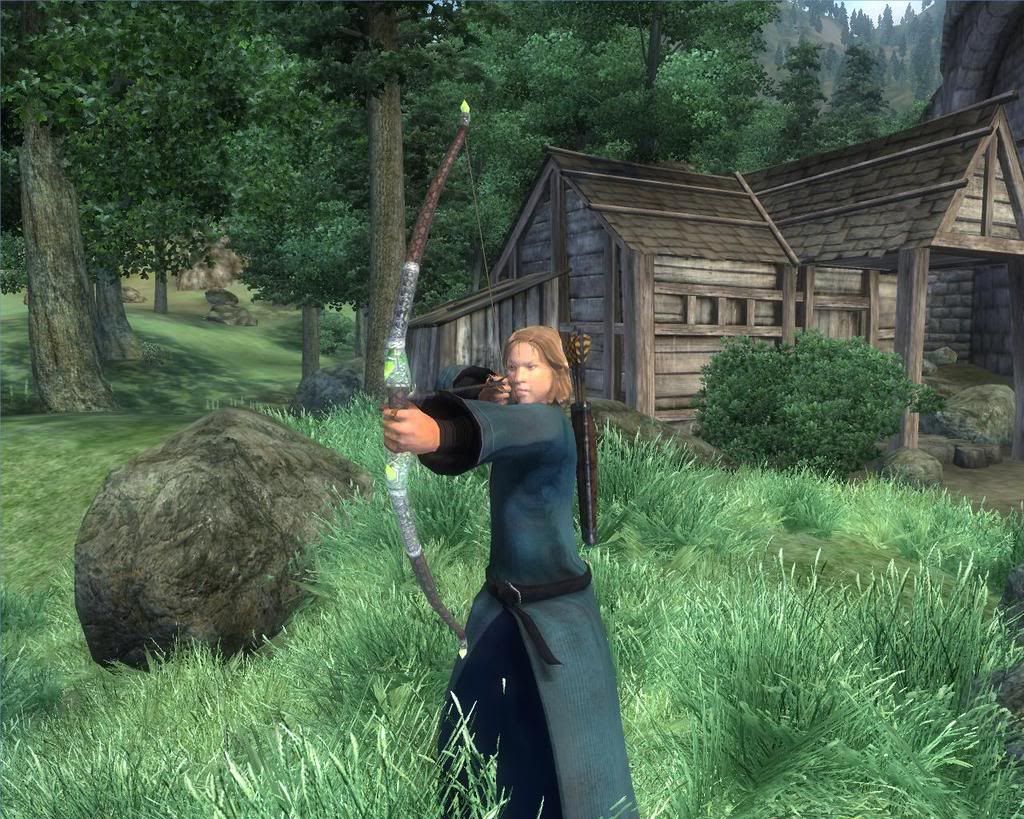
Oblivion offered admirable control to players by creating a difficulty slider with more than three or four settings. But what would be even more appreciated is player control over specific aspects of difficulty.
This isn't a new concept, of course. Long ago, Nintendo introduced unlockable cheats which could be toggled to affect difficulty in very specific ways. Goldeneye included a cheat that equipped all enemies with rocket launchers. Many games include cheats for invincibility, infinite ammo, or resource availability (weapons, armor, etc). Perfect Dark 64 brilliantly allowed players to choose the personality types of AI opponents.
I just want to point out that much more could be done here. Make players unlock advanced difficulty controls through completion of gameplay, because you've crafted a carefully balanced experience that they might cheat themselves out of if offered control too early or easily. But there are countless kinds of gamers with different needs and desires. Advanced difficulty controls enable players to make your game more personal, as well as add invaluable replayability.

For example, Oblivion could have included damage sliders for different kinds of weapons (bows, melee, magic). Halo 3 could have included a cheat for kamikaze AI (fearless, constantly charging enemies) or put those terrifying hammers in the hands of more enemies. Fable 2 could include cheats that affect the dog companion's combat effectiveness or AI personality (make him vicious or apathetic to combat), or change how NPCs react to the player's character. Dead Space could let players turn on zero gravity in any area, or offer a "Hell" difficulty mode (ala Diablo 2) with more enemies and stronger weapons.
Changes like these are often simple number-switching... quick and easy to implement as a feature to be toggled on or off. If you could offer a player hours of extra fun with only a few extra hours (if that) of development time, why not do it?
Wednesday, November 21, 2007
Room for the reckless
Ever noticed that "berserkers" in video games are never encouraged to go berserk? Their rage can make them faster, more powerful, or open up special attacks, but it never really sends them into a frenzy.
Games usually emphasize strategy and thoughtful play for a number of reasons. For one, many people like to be challenged intellectually. Also, it's easier for a developer to control a game's pace and intensity if the game is focused on overcoming set obstacles in controlled ways.
But there's something to be said for reckless gaming. I like intellectual challenges, but I also enjoy careless mayhem in wild environments. Some people have first-hand experience of my reckless habits, like charging into the midst of five Halo 3 brutes so I can smack one in the face with the butt of my assault rifle.
Sometimes, I want to play without a seatbelt. Sometimes, I want to drive off-road... in a sportscar. Sometimes, I don't want to worry about death penalties, health bars, mana bars, etc; I just want to play in the experential, unfocused way that we all enjoyed when we were little kids.
The first game I can remember that was devoted to this sort of play is Rampage. Here's your giant monster. Here's a city full of terrified citizens and skyscrapers. Now, go eat people and smash buildings.
Spore will certainly involve more strategy than Rampage, but it also is devoted to experential play. I, for one, expect to be spending more time in the editors than in any other part of the game. When I take my custom creature out into the wild, I can expect the environment to be wild... to be strange and untamed. When my creature meets another, there will be no name coloration to tell me, "This thing's going to spank you, then laugh at you, then eat you. Run away!" That's because the game isn't about victory and defeat. It's about enjoying the moment, and exploring.
Should there be more games like this? Definitely. But perhaps a better question is: Can there be room for the reckless in games that also include strategic play? Can an MMO, for example, allow my berserker to truly be a berserker, while also allowing my wizard friend to play thoughtfully to conquer fixed achievements?
Games usually emphasize strategy and thoughtful play for a number of reasons. For one, many people like to be challenged intellectually. Also, it's easier for a developer to control a game's pace and intensity if the game is focused on overcoming set obstacles in controlled ways.
But there's something to be said for reckless gaming. I like intellectual challenges, but I also enjoy careless mayhem in wild environments. Some people have first-hand experience of my reckless habits, like charging into the midst of five Halo 3 brutes so I can smack one in the face with the butt of my assault rifle.
Sometimes, I want to play without a seatbelt. Sometimes, I want to drive off-road... in a sportscar. Sometimes, I don't want to worry about death penalties, health bars, mana bars, etc; I just want to play in the experential, unfocused way that we all enjoyed when we were little kids.
The first game I can remember that was devoted to this sort of play is Rampage. Here's your giant monster. Here's a city full of terrified citizens and skyscrapers. Now, go eat people and smash buildings.
Spore will certainly involve more strategy than Rampage, but it also is devoted to experential play. I, for one, expect to be spending more time in the editors than in any other part of the game. When I take my custom creature out into the wild, I can expect the environment to be wild... to be strange and untamed. When my creature meets another, there will be no name coloration to tell me, "This thing's going to spank you, then laugh at you, then eat you. Run away!" That's because the game isn't about victory and defeat. It's about enjoying the moment, and exploring.
Should there be more games like this? Definitely. But perhaps a better question is: Can there be room for the reckless in games that also include strategic play? Can an MMO, for example, allow my berserker to truly be a berserker, while also allowing my wizard friend to play thoughtfully to conquer fixed achievements?
Subscribe to:
Posts (Atom)
